Tuesday, May 21, 2013

Sunday, May 19, 2013
Blog 25: Mentorship
LIA Response to blog:
Literal
· Paul Yanes Cell Number:(626)-383-6323, Work Number: 1(213)-798-582, Email: Paulyanes@mac.com
· David Wade Cell/Work Number: (714)-801-5517, Email:david@davidowade.com
Interpretive
The most important thing I have gained from this experience is problem solving skills, viewing things differently, and being patient because of what this project required me to do and how my mentors taught me. I had to face many problems that really frustrated me and I could not think of a way to over come those problems because of the frustration and stress. This projected presented problems on a whole over level for me when I was making my furniture. My mentors helped me with this problem by showing me how to over come situations like the one sI had faced and taught me the best problem solving skills I have ever learned. They had to teach me these skills because in woodworking, every project is a problem weather its how to make joinery, or which wood to use based on its characteristics so it suits your projected. It was very challenging and I am grateful for this experience because I now have better problem solving skills then I did nine months ago. I also learned how to be patient and how to plan ahead of time which also helped a lot. I was inpatient at times and that led to more problems because I would mess up by cutting a piece the wrong way, or maybe I had cut it too short because I was not patient enough. I needed to plan a head of time to because I was bad at estimating how much time a project would take me. With my new problem solving skills, I learned skills that helped me AVOID problems in the first place, such as taking possible problems and variables into consideration so that I will have plenty of time to do the work I need to do to the best of my abilities.
Applied
Everything that I have done with my mentorship hours have helped me answer my EQ because I explored each of my answers. My answers where basic things in woodworking, finishing, joinery, and materials. Those are the main things in woodworking because you must always finish your piece to preserve it, you join the furniture together with joinery, and you use different wood materials to make your furniture. I explored each answer and was able to fully understand what each of my answers meant and how well they answered my essential question which was "what is most important for a woodworker to consider in creating an aesthetic piece of furniture?". Finishing was a good answer, and my mentorship helped me understand why it was such a good answer. Because of the many different types of finishes, they change they have the ability to change the color and texture of the wood which changes the aesthetics of the furniture piece. In my mentorship I explored my second answer Joinery. My mentorship really helped me with this answer because I gained the understanding of realizing that joinery is a whole different type of aesthetics. Joinery provided the ability for the furniture piece to function. To some people, the function of the furniture (which comes from the joinery) was more aesthetic then the appearance of the furniture. My mentor had told me that some people prefer personality over looks, joinery/ function over appearance. Joinery itself plays a role in the aesthetics of the furniture to a certain extent. For my third answer, my mentor had asked me what I always take into consideration in woodworking. The answer was not clear to me, but once I started my independent component two and did research, I realized that the wood itself, the material, is what every woodworker takes into consideration. I was able to back up my third and best answer because of my mentorship, my mentor had taught me about the different materials in woodworking, and about the characteristics about those materials. I experimented with different wood materials and saw their weakness and their strengths because of my mentorship. My mentorship provided solid experience and evidence for each of my answer which is how my mentorship helped me answer my EQ, by helping me have hands on experience and studying my answers and going into depth about how each answer is an answer to my essential question, and the relationship between each answer and my essential question.
Sunday, May 12, 2013
Blog 24: Exit Interview Questions
"I didn't realize how much I did, what I accomplished, what I took for granted and how it all came together."
Content:
(1) What is your essential question? What is the best answer to your question and why?
My essential question is "What is most important for a woodworker to consider in creating an aesthetic piece of furniture?". My best answer is the material, in other words, the type of wood a woodworker uses. I chose this answer because the furniture design itself is expressed by the wood with colors, texture, grain patterns, and sometimes even the density/strength of the wood which plays a big role in making it aesthetically pleasing. After this nine month process, the material is always something I have considered, along with my mentors.
(2) What process did you take to arrive at this answer?
I had to take a very frustrating process by having to analyze the all the different things woodworker would take into consideration. With the help of my mentors I narrowed down my answer to three; finishing, joinery, and material. I then came across a book by George Nakashima that revealed to me what my best answer may possibly be. Once I had an idea, I spend most of my time studying different woods to be able to support my best answer.
(3) What problems did you face? How did you resolve them?
One of the biggest problems I faced was choosing my top three answers because there are several crucial aspects of woodworking that must be considered. I solved this problem by researching those answers and by using my past experience with woodworking to understand which ones would be my answers. Another problem was working efficiently because I had to really learn how to properly work so I can be efficient and accurate when making the actual furniture. My mentor and experience helped me solve this problem because he reminded me of the important basic things I had learned when I was younger and taught me how to be an efficient woodworker. My last problem was finding mentorship, I had to use my father as a mentor at first for a month or two. But he helped me fins another mentor by talking to his friends and this woodworking blog that he joined. They where able to get the word out to different woodworkers in my area and asked if any where willing to mentor me for my senior project. Luckily I ended up finding two mentors.
(4) What are the two most significant sources you used to answer your essential question and why?
My first most important source was my mentor Paul Yanes because of his experience and knowledge that he shared with me. Although he is my father, he certainly in no way treated me like a son during this project, only as an apprentice. He taught me everything I know and helped me gain life long skills that I can use from woodworking. He also introduced me to his 'woodworking bible', which is my second best source. The book is called "The Soul Of A Tree, A Woodworkers Reflection" by George Nakashima. This book was indeed an amazing book that described in detail every aspect of woodworking. From the wood to the woodworker themselves, it helped me find my best answer, and showed me how my senior project was indeed a type of art and how a woodworker is not just a carpenter, or an architect, but an artist as well.
(5) What is your product and why?
My product was gaining skills that I can use the rest of my life. I learned patience, how to work efficiently, and most impotently, how to find different ways to solve one problem. I ran into so many walls during my senior project when practicing technique and making a furniture piece. I simply could not figure out how to overcome certain obstacles. My mentor was able to show me that at times, I need to be patient, efficient, think, and be intelligent about how to solve my problems. He showed me how to make jigs (fixtures or templates) in order to overcome these problems of perhaps; not being able to cut a certain angle, or making sure all the dimensions are accurate. What ever the problem may be, I learned how to face the problems the proper way, the intelligent way and most efficient will help me through out my life.
Tuesday, May 7, 2013
Blog 23: 2014 Interview
Your goal: Be positive and helpful
Content:
1. Who did you interview and what house are they in?
Junior Rico from South House.
2. What ideas do you have for your senior project and why?
2. What ideas do you have for your senior project and why?
Junior plans to do his senior project on auto mechanics (more specifically how an engine block works) because he is interested in anything with moving parts.
3. What do you plan to do for your summer 10 hour mentorship experience?
3. What do you plan to do for your summer 10 hour mentorship experience?
Junior already has a mentor in whom he will do his ten hours with during the summer. He will be learning from his mentor about engines and expanding his knowledge on his senior topic.
4. What do you hope to see or expect to see in watching the 2013 2-hour presentations?
4. What do you hope to see or expect to see in watching the 2013 2-hour presentations?
Junior hopes to see anything with moving parts and that has to do with mechanics during the senior presentation.
5. What questions do you have that I can answer about senior year or senior project (or what additional information did you tell them about senior year or senior project)?
5. What questions do you have that I can answer about senior year or senior project (or what additional information did you tell them about senior year or senior project)?
I told him he should talk to Pitman about engines because she is familiar with how they work and to get ideas from her for his science fair project.
Thursday, May 2, 2013
Thursday, April 25, 2013
Blog 21: Independent Component 2
LITERAL
(a) “I, Sebastian Yanes, affirm that I completed my independent component which represents 30 hours of work.”
(b) "The Soul of a Tree A Woodworkers Reflection" by George Nakashima, Interview 4 with David Wade, Mentorship with Paul Yanes, "Worker in Wood" by James Krenov, & "Box- Making Basics: Design, Technique, Projects" by David M. Freedman.
(c) Independent Component 2 Hour Log
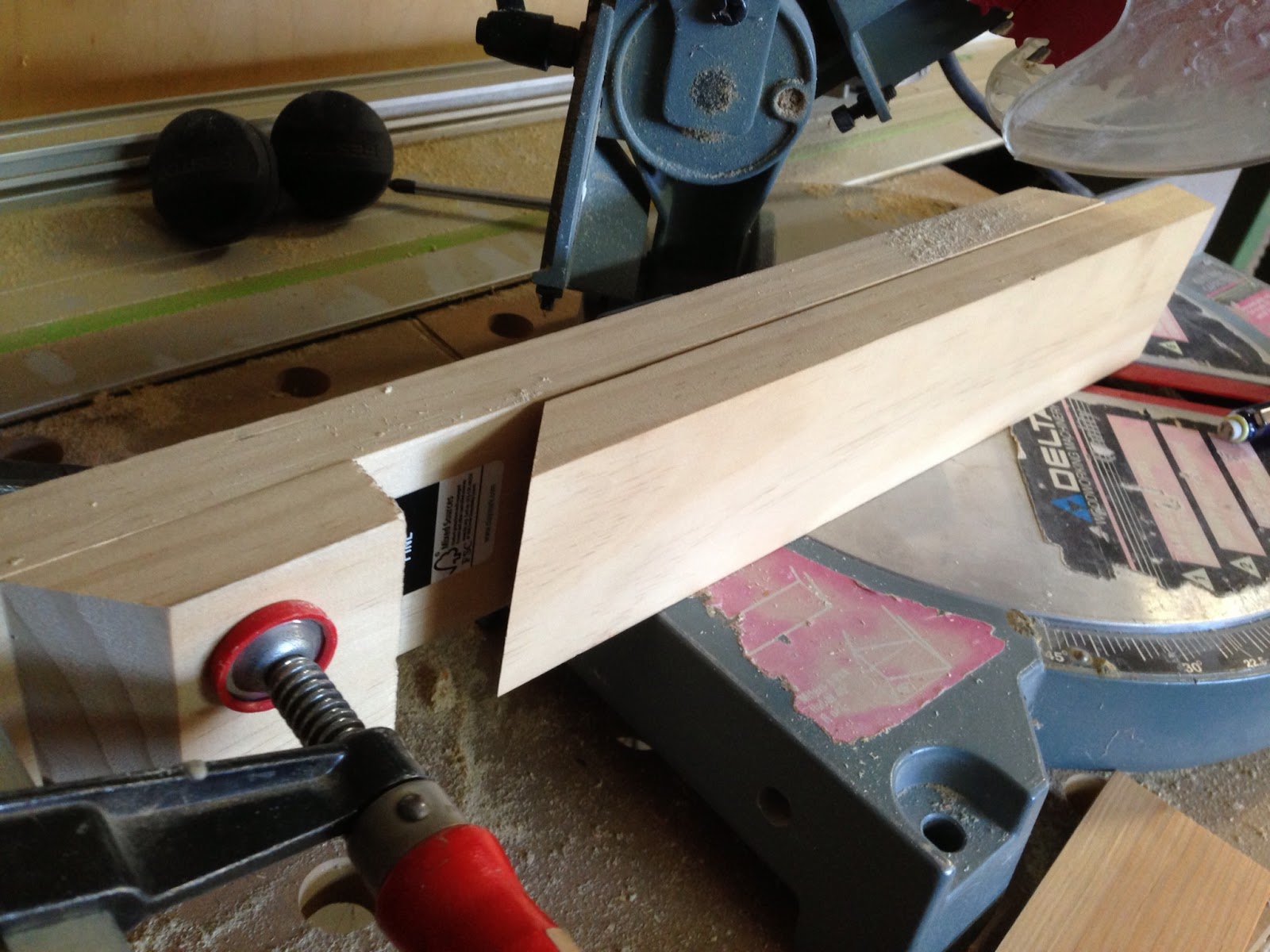
(d) I was able to make three different types of joinery. One was a visible finger joint, another was a half hidden/concealed finger joint, and the last was a 90 degree joint. I then was able to begin to use one of the joints to make a jewelry box. I had to make a jig which is a wood template that allows you to make the same cut/joint so that it is exactly the same, and you can make it faster. I used Pine Wood and a Mahogany Veneer. I was not able to complete it, although I am nearly done. I will be finished by no later then Wednesday and post a picture of the completed version. I also matched the grain of the wood so that it can flow and was able to refine the wood with a unique technique I learned from my mentor to make dents in the wood vanish.
INTERPRETIVE
This independent component was significant to me because it I was able to do most if it on my own and had my mentor there just to watch over me and help me incase I was doing something wrong. More importantly, it taught me the basics of building furniture for a customer, not for myself which was extremely different because you had to limit your ideas and think what would best appeal to your customer as suppose to what appeals to you. It made me confident in all three of my answers which are finishing, joinery, and material. I had to focus on what type of joinery to use and how to make it. I decided to lean more towards aesthetics as suppose to function so I focused on the finishing and material more then what joinery to use. I decided to explore my second answer which was joinery, and was able to make three examples of different joinery. I made a finger joint, a concealed finger joint, and a 45 degree joint. I decided to go with the 45 degree joint because it was more challenging, and also because I could make my furniture piece focus more on the finishing and material as suppose to the joinery because I would have had too much detail for such a small object. It would have been very overwhelming I think. So I made a jig and a guide to make the 45 degree joint, spent time nurturing the wood, assembling the jewelry box, finishing the inside with the Maloof finishing, sanded the piece, make test pieces so I could get the right jig so the dimensions where all the time. It was just over 30 hours of work. This component was most important because I took everything I gave learned in my research and experience with my mentors and applied it to this project and applied all three of my answers. I saw the importance of finishing and the affect it has in furniture first hand, I was able to explore more joints and made my own to see their pros and cons and decided which to use for the jewelry box, and I had to hand pick the right materials so that the grains texture, and the colors all matched to give it an affect that was smooth.
APPLIED
This component helped me really understand the importance of all of my answers. I am more confident in explaining and backing up my answers because I have evidence and experience doing them. I was able to realize how important finishing is when making furniture such as a jewelry box (case good) because it really brings out the grain of the wood and the texture and changes the color at times. It's extremely hard to get the color and texture right when applying the finishing because you can either make it look very unnatural, which does not look good, or you can apply the finishing so the piece looks just right. I applied thing layers so that I can get the right look with the finishing. I also explored the joinery and saw that the joinery really does hold the piece together, and i saw how difficult it was to make jigs for joints. It was hard to choose the right joinery, but in the end, I went with the joint that was best suited for a small piece of furniture that had very simple detail and was not extremely overwhelming. And lastly, I was able to focus on my best and third answer which was the material. I really took the material into consideration because i did not want the grain of the wood to be so simple to where it wasn't noticeable, but I also didnt want it to overwhelm the piece and take over. I decided ti use soft woods because it is easier to make this type of joint with soft woods, and the grain is not as exotic. The grain of Pine WOod is smooth, elegant, and very settling. The mahogany on the inside is very clean and the grain and texture is durable to maintain jewelry pieces. I also made sure the direction of the grain flowed. I took more time nurturing the material and making sure the grain flowed then anything else. So the material is extremely important and it is what I personally take into consideration the most hen making an aesthetic piece of furniture.
 |
| Run way of a jig to cut Finger Joints. |
 |
| David Wades Woodshop. |
 |
| Jig I made myself for 45 degree joint with a guide/stopper (left) |
 |
| Half concealed finger joints (fingers are dovetails to create pattern) |
 |
| Full picture for the finger joint jig. |
 |
| Completed finger joint. |
 |
| French curve template and pin bits. |
 |
| Finishing making the groove for the bottom panel. |
 |
| Applying maloof finish to the inside of the pieces. |
 |
| Gluing the pieces together with clamps. |
 |
| Making sure the corners are as perfect as possible after going through dozen of pieces |
 |
| The first version of the jig for the 45 degree joint (prototype failed)... |
 |
| Finished rounding off the edges. |
 |
| Make sure the cut will be accurate because joints is about precise cuts. |
 |
| Cutting the 45 degree joints. |
 |
| Base of box is now assembled, glued, and finished inside with Mahogany. |
 |
| (Before) Clamps made dents in the wood (before refining with water and ironer) |
 |
| (After) Wood is refined from the dents created by clamps is complete. |
APPLIED
This component helped me really understand the importance of all of my answers. I am more confident in explaining and backing up my answers because I have evidence and experience doing them. I was able to realize how important finishing is when making furniture such as a jewelry box (case good) because it really brings out the grain of the wood and the texture and changes the color at times. It's extremely hard to get the color and texture right when applying the finishing because you can either make it look very unnatural, which does not look good, or you can apply the finishing so the piece looks just right. I applied thing layers so that I can get the right look with the finishing. I also explored the joinery and saw that the joinery really does hold the piece together, and i saw how difficult it was to make jigs for joints. It was hard to choose the right joinery, but in the end, I went with the joint that was best suited for a small piece of furniture that had very simple detail and was not extremely overwhelming. And lastly, I was able to focus on my best and third answer which was the material. I really took the material into consideration because i did not want the grain of the wood to be so simple to where it wasn't noticeable, but I also didnt want it to overwhelm the piece and take over. I decided ti use soft woods because it is easier to make this type of joint with soft woods, and the grain is not as exotic. The grain of Pine WOod is smooth, elegant, and very settling. The mahogany on the inside is very clean and the grain and texture is durable to maintain jewelry pieces. I also made sure the direction of the grain flowed. I took more time nurturing the material and making sure the grain flowed then anything else. So the material is extremely important and it is what I personally take into consideration the most hen making an aesthetic piece of furniture.
Thursday, April 11, 2013
April Updata
So I have recently been working on trying to get all my supplies together and cutting the wood so to the right dimensions so that I can build my furniture. I have taken on quite a few projects to contribute to my iPoly community. I am building a wall- mountable book shelf, a sign/ stand for prom, a small jewelry box for iFest, and a ramp that requires me to bend the wood for my physics teacher for being late all the time. I have a lot of work hopefully I can finish it on time, and hopefully it all goes smooth, I collected all the wood that I need for this project. I am ready to start building, I had to restart because the dimensions where off and the piece was not very stable. As for mentorship, I usually have my father be my mentor because he is the most convenient and the one who is more available. I still keep in touch with my mentor David Wade and plan to see him this week for any extra tips before I begin the process of building. I had to let the wood sit in my garage for a few weeks so that the wood accumulates to the Moisture Content of its surrounding environment which is my garage. I will be building in my garage so I must make sure that the wood is at level with the environment and it may take some time, thats why I left it to sit in the garage for a week or two. Other then that hopefully my dimensions are right so I can complete my promises and my projects!
Subscribe to:
Posts (Atom)